
Jerryfish

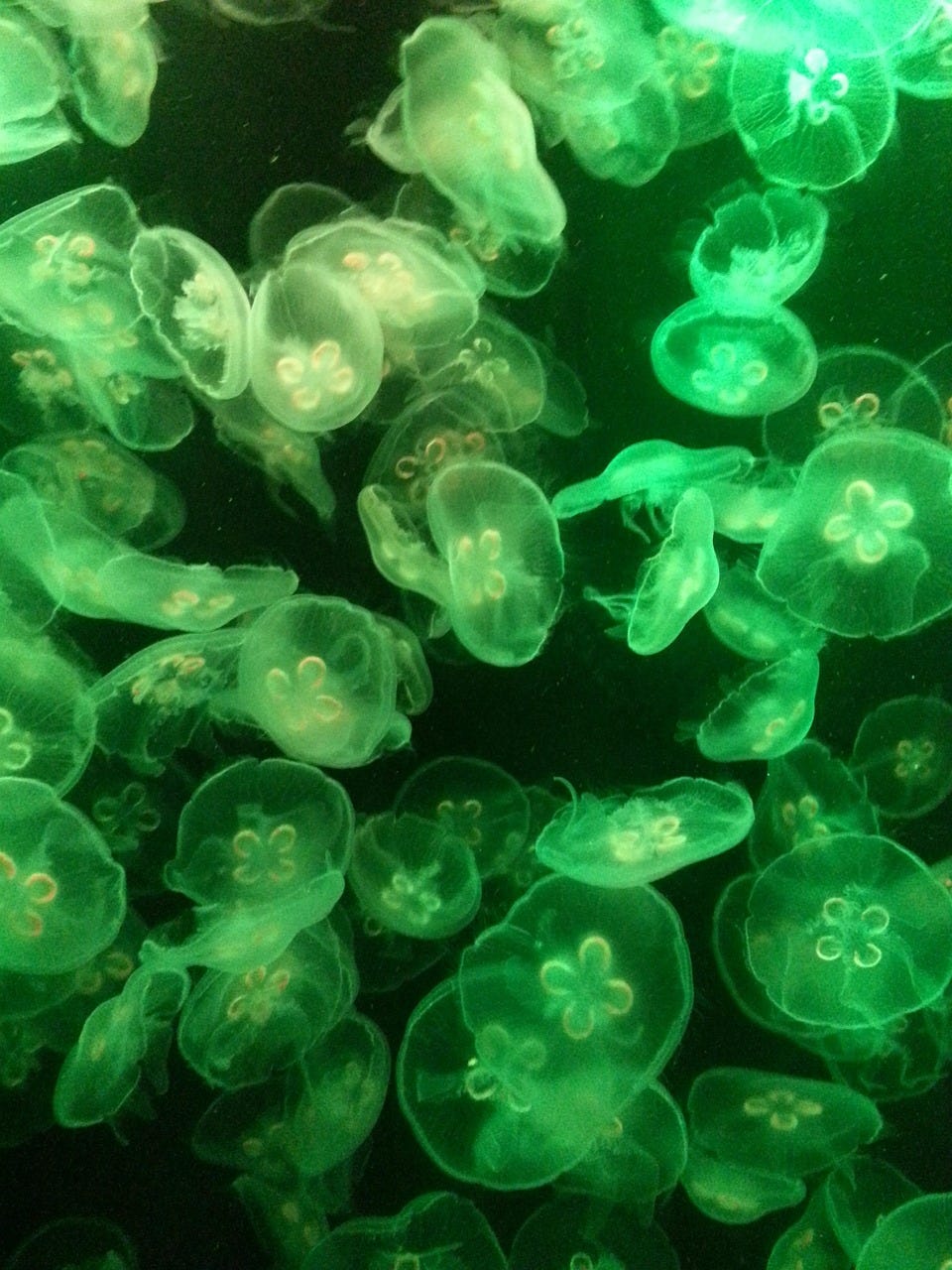
There is a specific gene, the green fluorescent protein, in certain jellyfish, which makes them glow in the dark. In 1997, scientists successfully bred mice which had been implanted with this gene. So we had glow-in-the-dark mice. Everyone was very excited and a race began to see how many other creatures could be made to glow in the dark. Check it out online – they’ve done it with chickens, pigs, sheep, and monkeys. And it’s even been done with a human. One human. Our son, Jerry.
We named him Jerry after the cartoon mouse, a nod to the first bioluminescent mammal. The procedure for Jerry was the same as the procedure for the other animals. Humans are not exceptional. We got the gene in there when Jerry was an embryo and let nature do the rest.
Jerry was a happy baby, no trouble at all. He was very calm. People often remarked on how placid he was, how agreeable. He cried a bit, but compared to most babies I would say he was exceptionally relaxed. We noticed nothing unremarkable about him, apart from the glow. He did have a fondness for baths, and fish, but nothing we were very worried about. As long as he was happy, that was the main thing.
The glow-in-the-dark thing was incredibly useful to us as parents. We never lost him. I mean, during the day we could see where he was anyway, but during the night, whilst other parents were no doubt rummaging hopelessly around in the dark, trying in vain to locate their offspring, we could pick him out a mile away as he glowed contentedly in the gloom.
He was also useful as a torch. We lived in the countryside and there were no streetlights. Sometimes we would need to go out on the lane to get wood for the fire. It was always a hassle trying to locate the torch and remember to buy batteries for it. But with Jerry, we strapped him to our backs and he lit up the whole road.
One problem that did come up was that he was constantly fending off moths and bats and other night insects. They just loved that glow. My wife came up with the ingenious plan of teaching Jerry to like and respect these night creatures, however. We told him that they loved him and wanted to be as close to him as possible and that he should be nice to them because they only wanted to be friends. It worked a treat. It worked so well that he developed a kind of obsession with them. His third birthday cake was covered in little bat cake toppers.
As he grew out of the toddler stage and into a more independent boy, Jerry gained a lot of attention from the other children. They all thought he was amazing. He was invited everywhere. One of the boys on our street painted himself from head to toe in luminous paint in an effort to be more like Jerry. The parents were not happy. They were a bit off with us for a while, but we understood they were jealous.
However, everything changed with Jerry when we went to the sea. Jerry was fourteen years old. We drove from Gastenburg; six hours it took us. Everything was fine on the way. We spoke about the beach, about the animals we would see, about safety and how dangerous the currents could be. Jerry was excited. At no point did we suspect anything out of the ordinary.
But when the first smell of the sea breeze wafted in the windows of the car, something happened to Jerry. I saw him in the rearview mirror rubbing himself all over the back seat. He did this for a good three kilometers or so, wriggling about, scratching himself and grumbling. Eventually, he couldn’t take it any longer.
“Mom! Dad! I have to get into the water as soon as possible!” he said. “I’m drying up!”
We explained that this was not scientifically possible. Humans regulate their hydration through drinking, and through the water which is contained in the food they eat. We offered Jerry a bottle of juice and a snack. But he was having none of it.
“No! I mean the outside of me! I need to get into the water right now! Quick!” he yelled.
We didn’t want to take any detours but we were in no doubt that something was going on, so we drove down the first road we thought might lead to the coast. We took way too many wrong turns trying to get there. Considering its size, the sea is frustratingly elusive, even when it’s right in front of you. Jerry got more and more itchy and more and more agitated the longer it took us to get to the water.
We got there in the end. Jerry was so worked up when we stopped the car that he barely waited for the engine to go off before he was half-way down the beach. To be honest, we could see what state he was in and were happy to see him go. If he needs water, I thought, I’m not going to stop him. Of course, we followed him down.
Well, I have never seen anyone before, since, or ever, in such a state of relief. Jerry was positively liberated. Liberated from what, we didn’t know, but he sure was feeling better. He was floating ten meters out, on his back, staring at the sky. I called out to him. He lifted a hand to let me know he had heard me, but continued floating.
“What’s going on?” I said to my wife.
“He must have a skin condition,” she replied.
We determined that the best course of action would be to visit a pharmacy and pick up some cream. But we couldn’t get Jerry out of the sea. I shouted out to him but he waved me away. My wife threatened him with all kinds of consequences, but he was having none of it. I waded out and tried to reason with the child.
“Jerry,” I said, standing waist-high in the water, “What are you playing at? We have to get you to a pharmacy.”
“Dad, I’m fine. I feel great,” my son replied.
“Jerry, you have to get out of the water. We have to check in at the hotel. Once we are checked in, you can go back in the sea. I promise.”
“Sorry, dad. I can’t get out. If I get out, I’ll dry up again. Leave me here and check in and come back and I’ll see how I feel then.”
There was no reasoning with him. It didn’t matter how many threats we issued, he wasn’t moving. So I left my wife on the beach and drove to the hotel to check in. It took me an hour. I stopped off at a pharmacy on the way and picked up some cream. When I got back to the beach, my wife was in a total state of panic.
“What’s wrong now?” I asked.
“Look!” she said. “Look!”
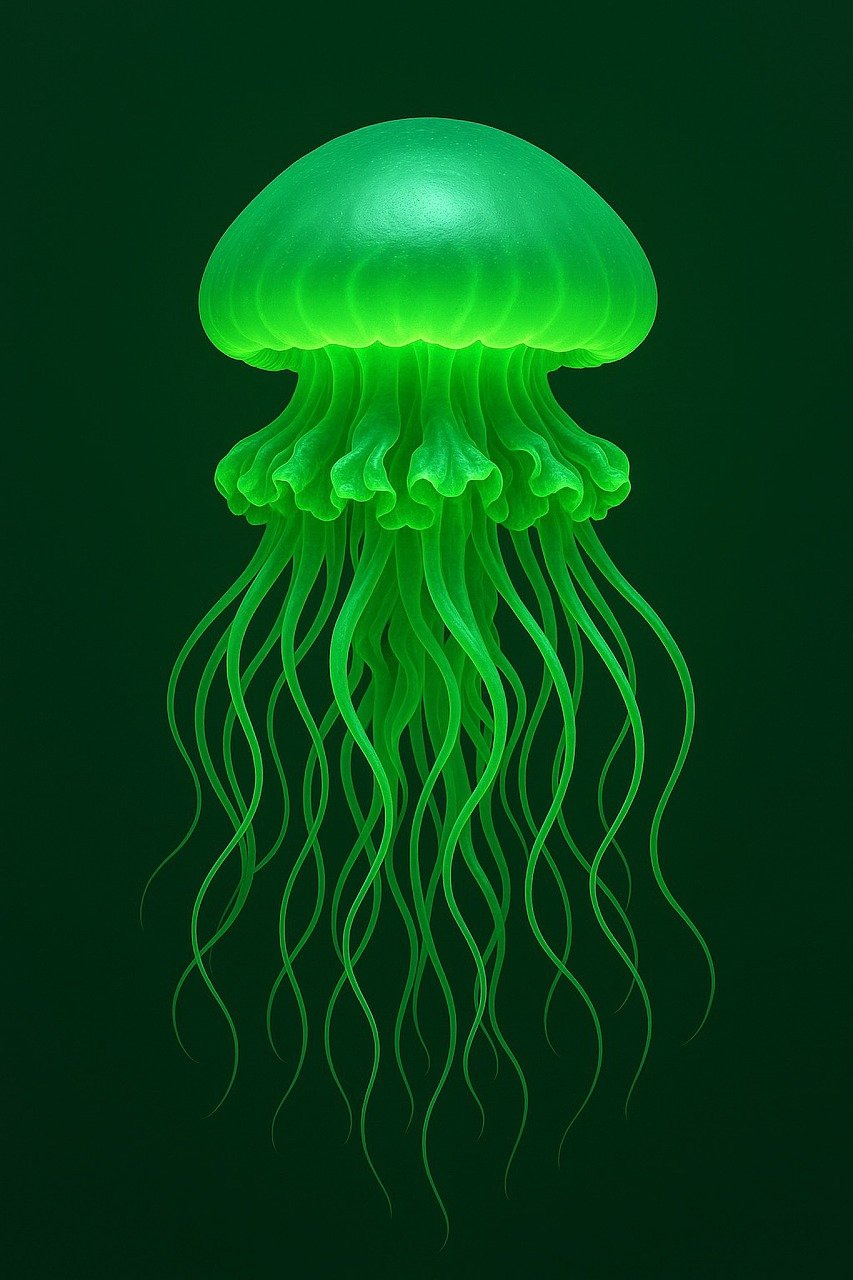
I looked out to where Jerry was still floating. He had been surrounded by hundreds of jellyfish. He was still on his back. The jellyfish bobbed around him like a squishy army. I decided to wade out again despite the chance of being stung.
“Jerry!” I said when I got near to him. “What are you doing now? What’s with all these jellyfish?” Luckily, I wasn’t being stung.
“Oh, hi, dad! We are just bobbing about. The current is calm and circular here so you can just drift around in the same spot as long as you don’t push off into the outer stream.”
“What?” I was confused. “Jerry, let’s get out now. I’ve checked into the hotel. I got some cream. Come one out and we’ll get something to eat and get that cream on you. Stop the itching.”
“Sorry, dad. But I can’t get out. Where’s the hotel? Is it near?”
“It’s around that peninsula. But Jerry, you can’t stay in here forever!”
“Oh, great. Well, you and mum go round in the car and I’ll float around the peninsula and see you in the water on the other side, near the hotel.”
“Jerry. You’ve never swum in the sea before. This is dangerous. We spoke about this. The tide could take you out into the deep waters and you could drown.”
“Oh, dad! Don’t you understand? I can’t get out. I belong here. This is me, dad. This is who I am now. This is who I have always been. I just didn’t know it. But these guys know it, these jellyfish. They know it, dad. They are my friends. I’m staying in the water, dad. I’m not a boy anymore, dad. I’m a jellyfish.”
Shock is not a strong enough word for what I felt. A jellyfish! A human boy who thought he was a jellyfish! I was stunned. I went back to my wife and told her the news.
“He says he’s a jellyfish!”
“A jellyfish!” my wife exclaimed.
“That’s what he says. He won’t get out. What should we do? Should we call the police? The coastguard? What are we going to say to them?”
“I’m going out there,” said my wife, and marched out to speak to Jerry. But she had no more success than I had had. Also, she got stung a few times. She came back to me on the beach and put some of the cream on the stings.
“They stung me when I got angry with him,” she said. “They’re protecting him.”
We didn’t know what else to do at this point so we called the police. They hung up on us. Clearly, they thought it was some prank. We called the coastguard next and had more luck with them. A boat with a couple of coastguards in it came around the peninsula and pulled up next to Jerry. I walked out to them.
“What’s going on?” one of the coastguards said.
“This is my son. He has never been in the sea before but he is refusing to get out. He thinks he’s a jellyfish!”
The coastguards looked around in amusement at all the jellyfish surrounding Jerry.
“What do you want us to do?” they asked me.
“Leave me alone!” said Jerry. “I’m fine! We’re not bothering anyone! Go and look for sharks!”
The coastguards looked at me and shrugged their shoulders.
“He doesn’t look like he’s in any danger,” one of them said. “We can’t force him to get out.”
“But he’s a fourteen year old boy!” I pleaded.
“If you can’t handle your son, that’s your problem. You need a family therapist, not a coastguard!” said the coastguards, and sped off in their boat. Jerry was beaming.
I went back to the beach. For the rest of the day, my wife and I sat on the beach looking out at Jerry floating about with the jellyfish. As night fell, we began to get desperate. I decided enough was enough and I would just drag him out. I walked over in his direction but the jellyfish blocked my way and started stinging me so badly I raced back to the beach yelping in pain.
“Sorry, dad!” Jerry shouted from the sea. “Better not try that again!”
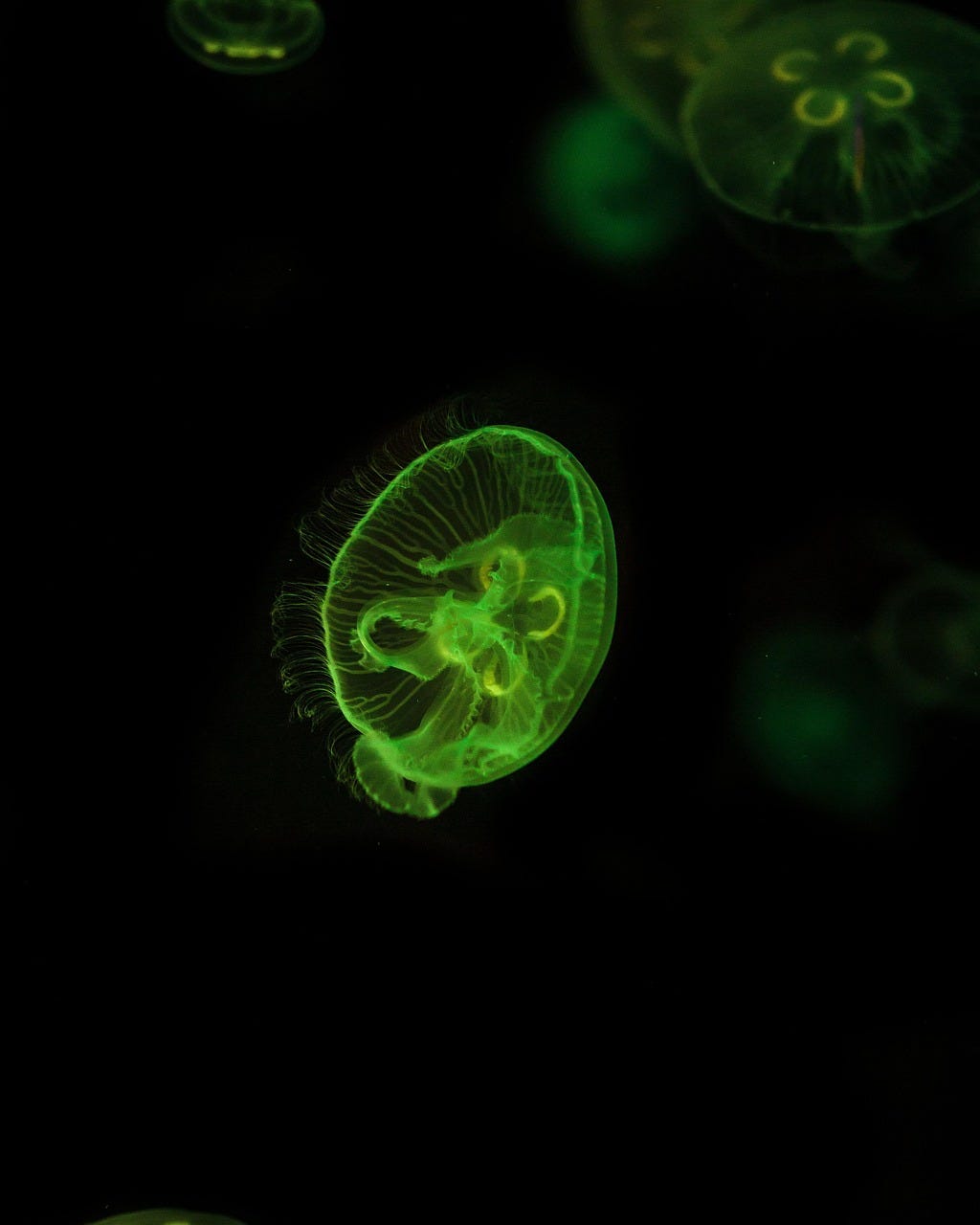
I didn’t. We stayed up all night that first night. Jerry and the jellyfish started glowing when the sun went down. Some beach-goers stopped to ask us what was happening. They shook their heads in disapproval when we told them, as if we were bad parents or something.
In the morning, the story having got round, lots more people arrived to see what was going on. A few journalists showed up and interviewed us and Jerry. By midday, there were at least a hundred people and two news crews on the beach. The police even arrived, although they did nothing except laugh and joke with the news crews. One of the reporters managed to get me in front of a camera. I have never been so mortified in my life.
“And you and your wife have been camped out on the beach all night. Is this correct?” the reporter said, pushing a microphone under my chin.
“Yes,” I said.
“And can you tell our viewers something about your son and why he will not come out of the water?”
“Well, he thinks he’s a jellyfish.”
“And is he a jellyfish? We have been hearing reports that he glows at night. Is it true that you are the parents from Gastenburg who implanted a jellyfish gene in their child?” the reporter asked.
“No. He is not a jellyfish. He is a human boy. He glows at night. That’s true. He has been implanted with the Green Fluorescent Protein from a jellyfish. That’s true. But that doesn’t change his species! We need help here, please. Please can you help us get our son out of the water? His mother is at her wit’s end,” I explained and pleaded.
“What kind of parent would implant their son with a jellyfish gene?” came the inappropriate question from this clearly unprofessional journalist. I walked away from the interview.
They interviewed Jerry too, of course. He told them what he had told us. He was a jellyfish now, not a human boy. He had always been a jellyfish and had only just realized his true nature. They asked him about the glowing, about life as a bioluminescent child, about whether he was ever going to come out of the water.
“No,” said Jerry. “Never. I am at home now for the first time and I am not leaving.”
A week passed and Jerry didn’t move. Three times per day we sent him out something to eat; he would only eat seafood. My wife and I took turns staying awake. We didn’t want to miss it in case he decided he’d had enough. Dozens of news teams came to report on the boy they were now calling ‘Jerryfish’. A thousand curious tourists stopped by to have a look.
By the end of that first week, we were exhausted. We still didn’t know what to do. To make matters worse, the general opinion of the news crews and the passersby was that it was all our fault. Not only had we created Jerry as he was, they said, but we now refused to accept him as he had become. Commentators on various clips said we were monsters. A webpage was set up called “Free Jerry” to which people donated funds which were going to be used to officially section off the inlet Jerry was floating in. The Governor of the state weighed in with a speech about the right to identify as whatever you want. Someone printed T-shirts, and a souvenir stall was set up on the beach which sold Jerryfish cups, pens, and balloons.
Ten days into Jerry’s stubborn protest, my wife and I were no longer angry. We were jaded. We missed our son. I purchased a thick rubber suit from a store specializing in industrial attire. I attempted one more time to pull Jerry out of the sea. I waded out in the cumbersome suit, my wife nervously biting her fingernails on the shore. A small group of do-gooders and activists watched my progress. Somebody shouted something about me being intolerant. I ignored it and went to my son.
“Jerry,” I said in a tired voice, “Your mother and I are desperate. We want you home, son. Please come out of the water.”
Jerry sensed the change in my tone. He could tell I wasn’t angry anymore. The jellyfish could feel it too. They moved ever so slightly away from us.
“Dad. I don’t know how to say it in a different way,” said Jerry. “I’m sorry, but I am a jellyfish now. You have to accept that. If you want to come into the water, I would love it. But I can’t go back on land again.”
He hadn’t changed his spiel, but maybe I was beginning to accept it, because in that moment, I gave up. The only thing I ever wanted for him was to be happy, and if he was happy, why was I fighting it?
“Okay, Jerry. I’ll talk to your mom,” I said. I leaned over to him as he floated beside me. “I love you.”
“I love you too, dad,” said my son.
I went back to my wife. I got out of the rubber suit and threw it on the beach.
“You won’t need it,” I said to her. “Go out and talk to him. But he’s not coming out. I think our lives have changed.”
My wife felt the change. She went out to Jerry. I don’t know what they said but I saw her holding him in a loving embrace before she came back to shore. I saw that the group of activists were wiping the tears away as my wife and I hugged.
We sold our house in Gastenburg and bought a boat. We have anchored it in the inlet next to Jerryfish. He is still there. Tourists stop by to have a look at him and throw him out some fish. He is sixteen years old now and perfectly content. The story of Jerryfish went viral for a while. We were in a documentary. We got a book deal. Needless to say, it received glowing reviews.